


 31 Jul 2025
Kiau Nuluh: Defending the Forest, Defining the Future
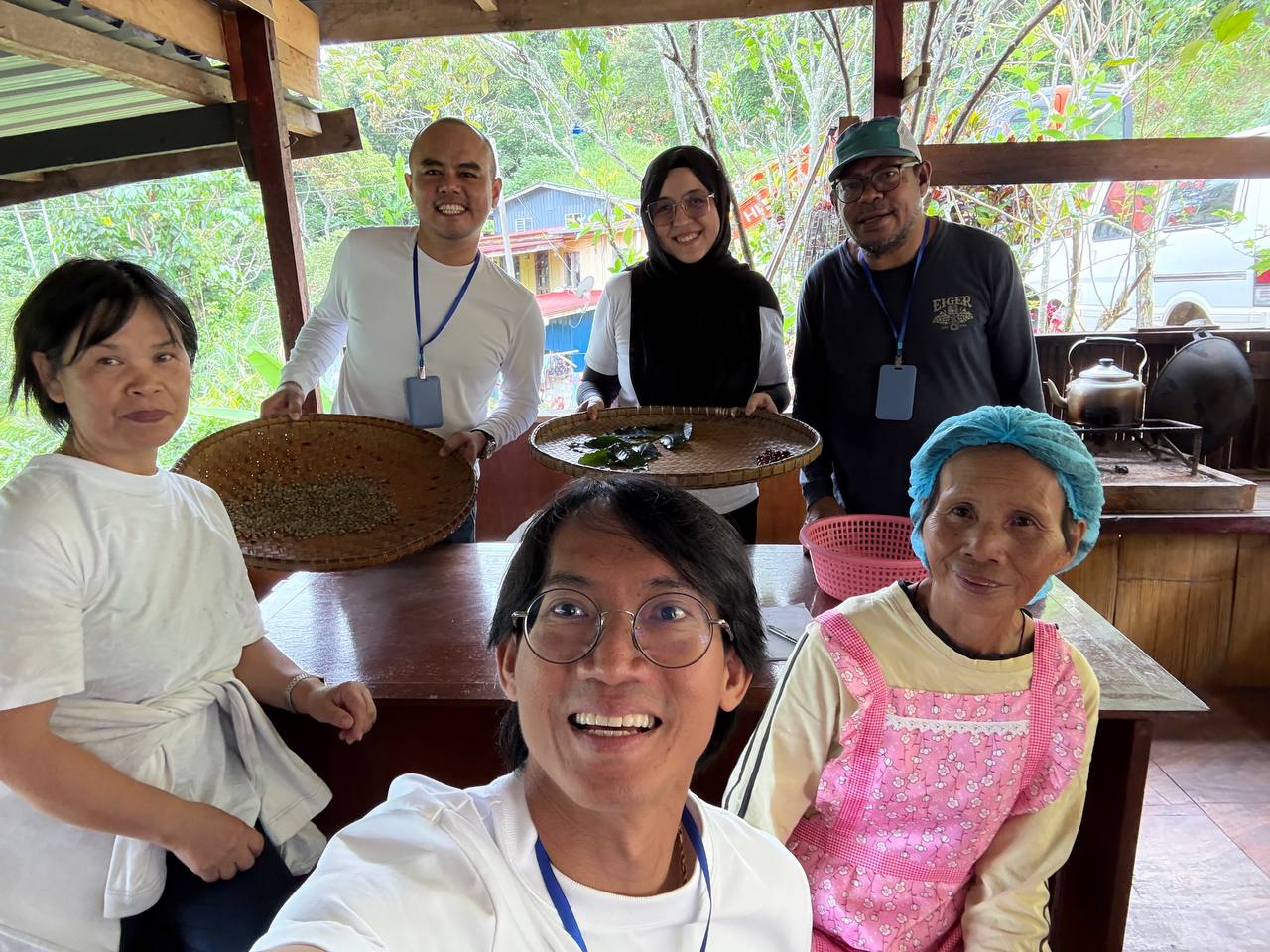
SEANNET 2025 participants join the Kiau Nuluh community in harvesting and processing locally grown coffee. The activity offered a hands-on experience of traditional practices rooted in sustainability, care, and community pride.
Amid the trees of Kiau Nuluh, the past and future walk side by side. During SEANNET 2025’s immersion, participants joined in daily rhythms of the community; making jam, roasting coffee, walking herb-rich trails. But beneath these acts of welcome, a deeper narrative emerged: one of vigilance, caution, and determination. Here, the forest is more than a resource, it is life, heritage, and home. In Kiau Nuluh, welcome comes with work. Participants learned to make pineapple jam and juice, and to roast and brew local coffee using traditional methods. Forest walks revealed plants that heal and protect, knowledge passed down through generations. Later, hands were in the soil, planting alongside the community. The day ended with a sharing session led by Mr. Sintia Samanding, the village elder. He spoke candidly about the challenges of balancing tradition and modern pressures, and about the intergenerational responsibility to protect the land. Conversations during the day revealed how knowledge here is carried in plants, songs, and in the slow patience of teaching a younger generation how to read the forest like a living text. Around the hearths of their homes, women shared stories of their ancestors who walked these same paths long before any road was built. The day’s hospitality was generous, but also sobering, for it brought to light the pressures that these villagers are currently facing. If Bundu Tuhan’s focus is on legitimacy, Kiau Nuluh’s concern is on transparency. External proposals have come their way, schemes and proposals involving carbon credits, and yet information has been scarce. “We don’t want to be lied to,” Mr. Samanding reminds us, with his gentle, yet passionate voice. It’s not a refusal of innovation, but a demand for clarity. They spoke of how the forest cannot just be valued for its economic worth but as a shared history, as something they are prepared to defend. The participants left with the deep impression that these are people who will never sign away their future without knowing every consequence. Kiau Nuluh’s stance is neither anti-development nor passive. It is grounded. “We’re not saying no to new ideas. We’re saying: tell us everything first. Let us understand, ask questions, and decide together.” Knowledge-sharing, they believe, is the best form of protection.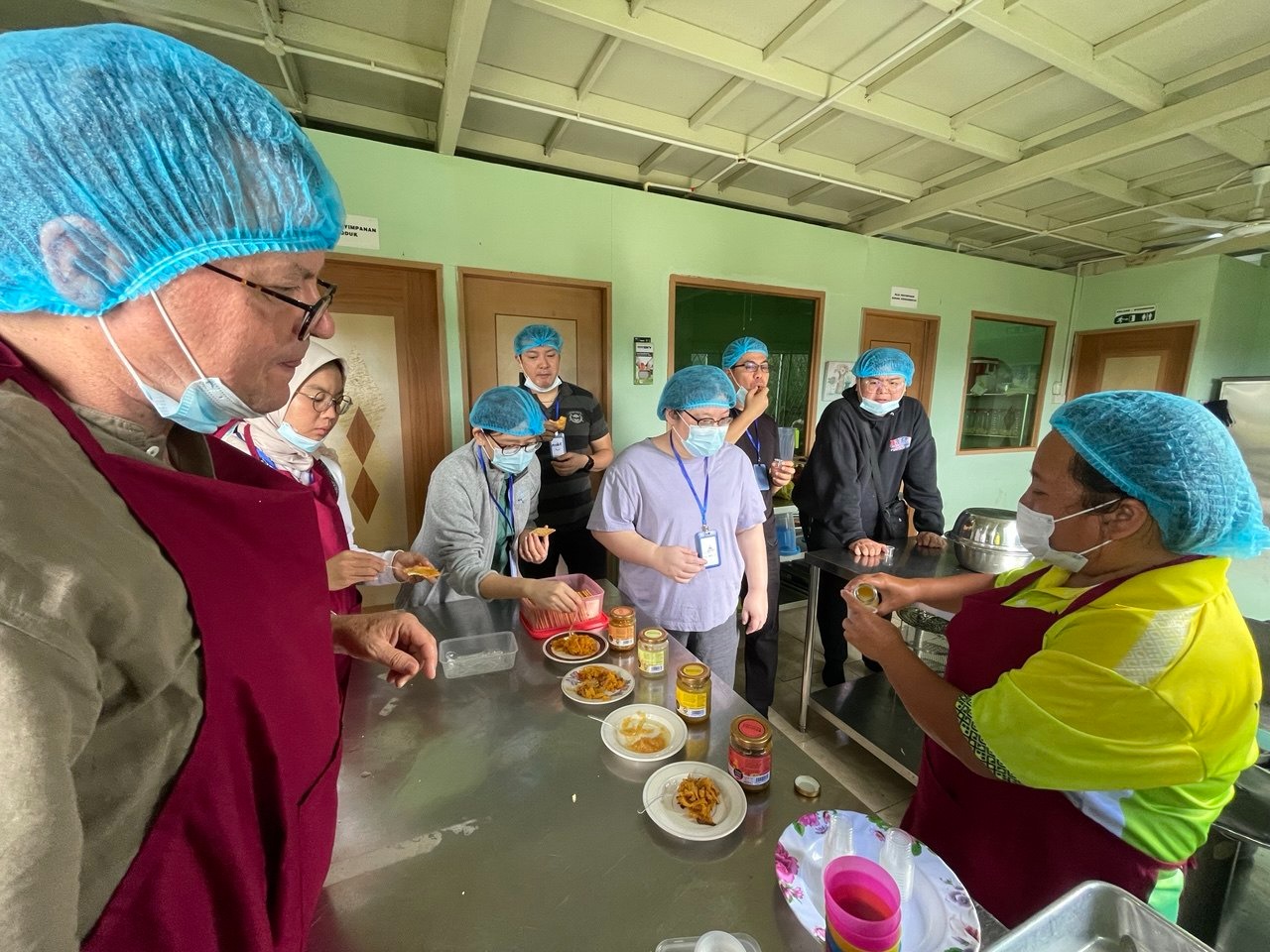
SEANNET 2025 participants learned to make pineapple jam using traditional methods passed down through generations in the Kiau Nuluh community. The hands-on session offered a sweet taste of local food heritage and embodied knowledge-sharing through practice.
By the end of the visit, over cups of coffee that they had roasted and brewed together, participants and villagers sat together reflecting on what true partnership looks like. For Kiau Nuluh, real partnership means being included, not spoken over. Their generosity came with an implicit invitation: to walk with them, to keep asking, and to remember that development must serve the community, not the other way around. Kiau Nuluh is teaching us a crucial lesson: true development begins with transparency, respect, and rooted participation.Written by Gaayathrey Balakrishnan