


 01 Aug 2025
Indigenous Land Tenure and Cultural Resilience in Kundasang: A Comparative Analysis with Indonesian Customary Systems
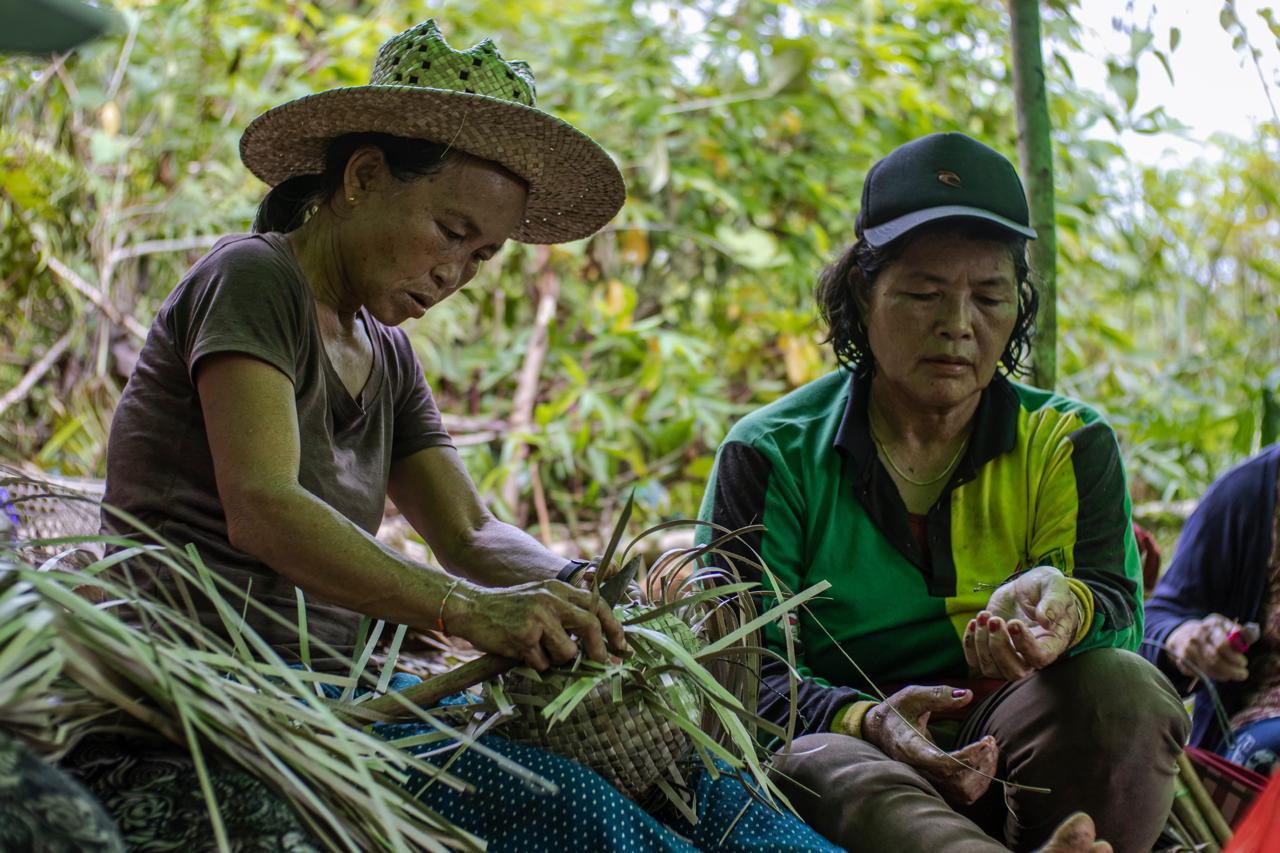
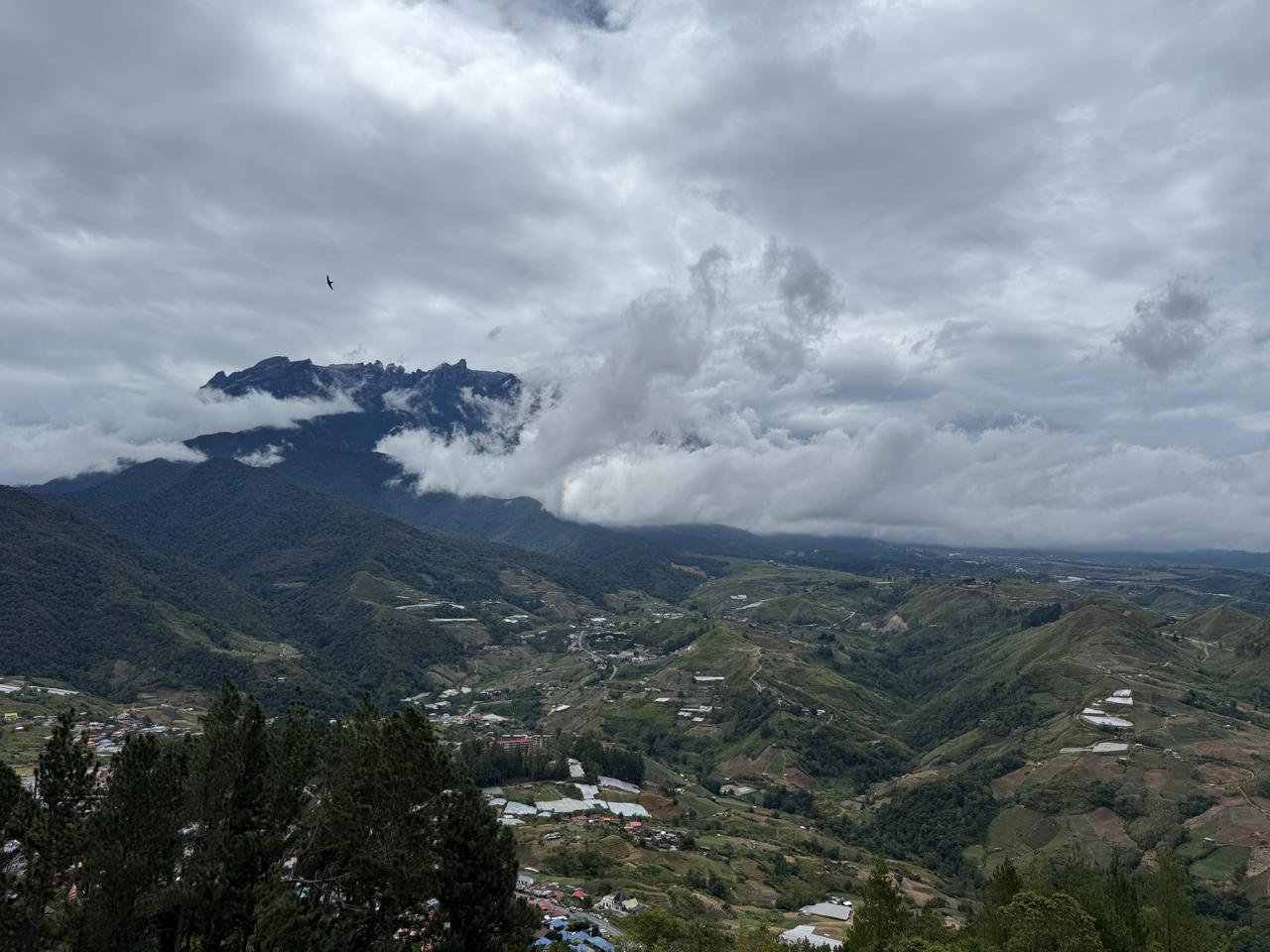
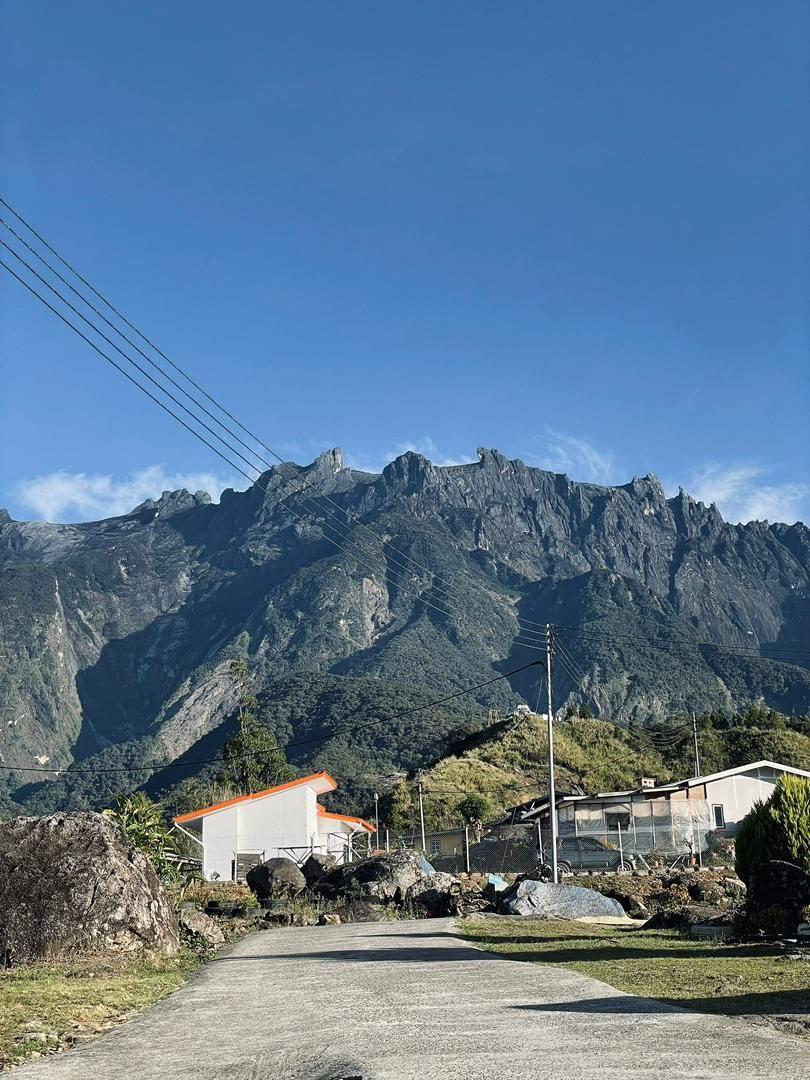
Standing atop mist-shrouded hills in Kundasang, Sabah, I listened to the Dusun community recount their resistance, built through customary laws and culture, to protect the boundaries of Punyukatan (ancestral territory), now divided by signs marking state-owned ‘protected forest areas’. This experience reminded me of the Dayak community in Kapuas Hulu Borneo, which is facing the invasion of oil palm plantations into customary forests. Both landscapes, despite being separated by national borders, reflect the same struggle: the state’s territorialization process that divides customary spaces. Indigenous communities in Kundasang, Sabah, Malaysia, face systemic challenges in maintaining ancestral land rights and cultural practices amid pressures of state territorialization and modernization. This article discusses the dynamics between Native Customary Rights (NCR), state land governance, and cultural adaptation among Dusun and Kadazan communities in Kundasang, Sabah, while reflecting on the parallel customary systems in Indonesia. Empirical insights are drawn from 2025 ethnographic interviews and critiques of land politics in Southeast Asia.
 Kundasang’s Indigenous communities encounter persistent land conflicts as state agencies, particularly Sabah Forestry, designate ancestral territories (Punyukatan) as “first-class reserve forests” without Free, Prior, and Informed Consent (FPIC). These takeovers exemplify what Peluso and Vandergeest (2001) identify as territorialization of the political forest—state efforts to control resources through the reclassification of customary lands. Communities resist through traditional management systems regulating access temporally, as in seasonal harvest periods, and spatially through clan-based governance. As one informant explained, “We have a rule called Winokok, which regulates a place that we can only take from during certain periods,” underscoring endogenous conservation ethics (Interview, 2025).
In comparison, Indonesia’s constitutional recognition of hutan adat (customary forests) under MK35 Ruling (2013) offers stronger de jure protections than Sabah’s nebulous NCR framework. Yet, implementation failures persist across both contexts. In Indonesian Borneo, mining and oil palm concessions routinely override the rights of Dayak communities (Li, 2014), mirroring logging encroachments in Sabah. While Indonesia’s customary councils (lembaga adat) parallel Sabah’s “10-house community” units in decentralizing governance, corporate-state collusion undermines both systems.
Kundasang’s Indigenous communities encounter persistent land conflicts as state agencies, particularly Sabah Forestry, designate ancestral territories (Punyukatan) as “first-class reserve forests” without Free, Prior, and Informed Consent (FPIC). These takeovers exemplify what Peluso and Vandergeest (2001) identify as territorialization of the political forest—state efforts to control resources through the reclassification of customary lands. Communities resist through traditional management systems regulating access temporally, as in seasonal harvest periods, and spatially through clan-based governance. As one informant explained, “We have a rule called Winokok, which regulates a place that we can only take from during certain periods,” underscoring endogenous conservation ethics (Interview, 2025).
In comparison, Indonesia’s constitutional recognition of hutan adat (customary forests) under MK35 Ruling (2013) offers stronger de jure protections than Sabah’s nebulous NCR framework. Yet, implementation failures persist across both contexts. In Indonesian Borneo, mining and oil palm concessions routinely override the rights of Dayak communities (Li, 2014), mirroring logging encroachments in Sabah. While Indonesia’s customary councils (lembaga adat) parallel Sabah’s “10-house community” units in decentralizing governance, corporate-state collusion undermines both systems.
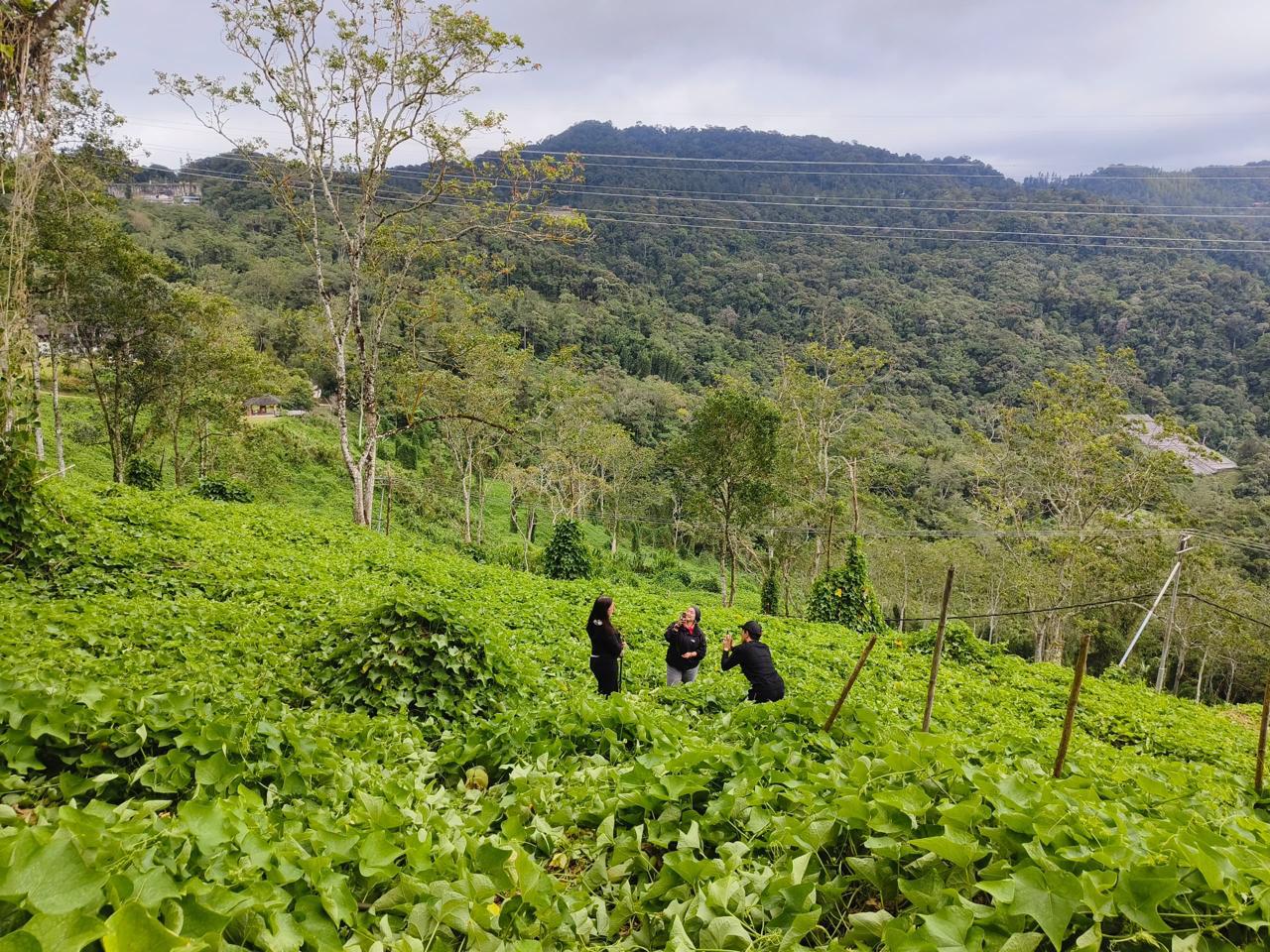 Sabah’s decentralized “10-house community” structure, requiring elder consensus and district-level negotiation for land access, parallels Indonesia’s nagari (Minangkabau) and lembaga musyawarah adat (Dayak) systems that similarly devolve authority to village or clan councils. Yet, in both cases, state-corporate alliances systematically undermine these endogenous governance systems. In Sabah, NCR claims are regularly overridden by timber concessions and forest reclassifications (Majid Cooke, 2018). In Indonesia, despite MK35’s formal recognition of hutan adat, local adat institutions remain powerless against provincial-level mining and plantation permits (Bedner & Arizona, 2019). As Li (2014: 78) observes, “customary systems function as sites of resistance but are structurally subordinated to capital-friendly state legal regimes.”
These struggles reveal how postcolonial states perpetuate colonial land grabs through “green grabbing,” or land seizures in the name of conservation (Fairhead et al., 2012). Legal recognition alone is insufficient; Indonesia’s MK35 ruling has faltered in the face of entrenched corporate interests. Instead, Kundasang communities demonstrate daily resistance (Scott, 1985): preserving magical architecture, oral history, and boundary markings despite state erasure. Their resilience highlights that Indigenous sovereignty is the foundation of biocultural diversity (Garnett et al., 2018).
Sabah’s decentralized “10-house community” structure, requiring elder consensus and district-level negotiation for land access, parallels Indonesia’s nagari (Minangkabau) and lembaga musyawarah adat (Dayak) systems that similarly devolve authority to village or clan councils. Yet, in both cases, state-corporate alliances systematically undermine these endogenous governance systems. In Sabah, NCR claims are regularly overridden by timber concessions and forest reclassifications (Majid Cooke, 2018). In Indonesia, despite MK35’s formal recognition of hutan adat, local adat institutions remain powerless against provincial-level mining and plantation permits (Bedner & Arizona, 2019). As Li (2014: 78) observes, “customary systems function as sites of resistance but are structurally subordinated to capital-friendly state legal regimes.”
These struggles reveal how postcolonial states perpetuate colonial land grabs through “green grabbing,” or land seizures in the name of conservation (Fairhead et al., 2012). Legal recognition alone is insufficient; Indonesia’s MK35 ruling has faltered in the face of entrenched corporate interests. Instead, Kundasang communities demonstrate daily resistance (Scott, 1985): preserving magical architecture, oral history, and boundary markings despite state erasure. Their resilience highlights that Indigenous sovereignty is the foundation of biocultural diversity (Garnett et al., 2018).
 The MK35 ruling’s requirement for perda-based (local regulation) recognition has created a predatory bureaucratic cycle. This forces Indigenous communities into self-exclusion (swaekslusi), wherein communities voluntarily limit their rights under conditions of state-engineered uncertainty (Zakaria, 2020). Drawing on Hall, Hirsch, and Li (2020), Zakaria argues that under such policies, “Indigenous communities risk becoming trapped in a phenomenon of self-exclusion, a situation in which a particular subject consents to the exclusion of others from fully accessing certain benefits, in response to threats or uncertainties regarding control over their own resources”.
This dynamic is reflected in communities’ acceptance of smaller land areas to avoid total takeover, relinquishing rights to resources under threat of criminalization, and supporting state-sanctioned indigenous councils that align with elite interests. While MK35 introduced political control, Sabah’s NCR framework allows communities to mark boundaries and document historical claims with immediate effect. However, this accessibility remains fragile, offering no protection against “forest reserve” redesignation (Peluso & Vandergeest, 2001) and necessitating continuous documentation through ancestral mapping.
Land conflicts and cultural adaptation among indigenous communities in Kundasang, Sabah, thus reveal the tensions between state territorialization and Indigenous sovereignty. While Indonesia’s constitutional framework attempts to offer a model through legal recognition, this approach is controversial because the political process is more prominent than the protection and recognition of customary community. Both countries continue to prioritize extractive economic agendas over the rights of indigenous communities. Sustaining NCR requires not only legal reforms but also placing the ontology of Indigenous communities within a conservation framework, recognizing, as one community leader emphasized, that “Our traditional way [is] to protect the forest.”
References
Adriaan Bedner & Yance Arizona. (2019. Adat in Indonesian Land Law: A Promise for the Future or a Dead End?, The Asia Pacific Journal of Anthropology, 20:5, 416-434, DOI: 10.1080/14442213.2019.1670246
Constitutional Court of Indonesia. (2013).Ruling MK35/PUU-X/2012.
Fairhead, J., Leach, M., & Scoones, I. (2012). Green Grabbing: a new appropriation of nature? The Journal of Peasant Studies,39(2), 237–261. https://doi.org/10.1080/03066150.2012.671770.
Garnett, S. et al. (2018). A Spatial Overview of the Global Importance of Indigenous Lands for Conservation.Nature Sustainability, 1(7), 369–374.
Hall, D., Hirsch, P., & Li, T.M. (2020).Kuasa Eklusi: Dilema Pertanahan Di Asia Tenggara [Power of Exclusion: Land Dilemmas in Southeast Asia]. KITLV Press
Li, T.M. (2014). Land’s End: Capitalist Relations on an Indigenous Frontier. Duke University Press.
Majid, Cooke. (2006). State, Communities and Forests In Contemporary Borneo. ANU Press
Peluso, N., & Vandergeest, P. (2001). Genealogies of the Political Forest in Southeast Asia.Journal of Asian Studies, 60(3), 761–812.
Scott, J.C. (1985).Weapons of the Weak. Yale University Press.
von Benda-Beckmann, F. & von Benda-Beckmann, K. (2013). Political and Legal Transformations of an Indonesian Polity: The Nagari from Colonisation to Decentralisation. Cambridge University Press.
Zakaria, Y. (2020). Hutan Adat mau kemana? [Where is Customary Forest Headed?]. Retrieved from Academia.edu.
The MK35 ruling’s requirement for perda-based (local regulation) recognition has created a predatory bureaucratic cycle. This forces Indigenous communities into self-exclusion (swaekslusi), wherein communities voluntarily limit their rights under conditions of state-engineered uncertainty (Zakaria, 2020). Drawing on Hall, Hirsch, and Li (2020), Zakaria argues that under such policies, “Indigenous communities risk becoming trapped in a phenomenon of self-exclusion, a situation in which a particular subject consents to the exclusion of others from fully accessing certain benefits, in response to threats or uncertainties regarding control over their own resources”.
This dynamic is reflected in communities’ acceptance of smaller land areas to avoid total takeover, relinquishing rights to resources under threat of criminalization, and supporting state-sanctioned indigenous councils that align with elite interests. While MK35 introduced political control, Sabah’s NCR framework allows communities to mark boundaries and document historical claims with immediate effect. However, this accessibility remains fragile, offering no protection against “forest reserve” redesignation (Peluso & Vandergeest, 2001) and necessitating continuous documentation through ancestral mapping.
Land conflicts and cultural adaptation among indigenous communities in Kundasang, Sabah, thus reveal the tensions between state territorialization and Indigenous sovereignty. While Indonesia’s constitutional framework attempts to offer a model through legal recognition, this approach is controversial because the political process is more prominent than the protection and recognition of customary community. Both countries continue to prioritize extractive economic agendas over the rights of indigenous communities. Sustaining NCR requires not only legal reforms but also placing the ontology of Indigenous communities within a conservation framework, recognizing, as one community leader emphasized, that “Our traditional way [is] to protect the forest.”
References
Adriaan Bedner & Yance Arizona. (2019. Adat in Indonesian Land Law: A Promise for the Future or a Dead End?, The Asia Pacific Journal of Anthropology, 20:5, 416-434, DOI: 10.1080/14442213.2019.1670246
Constitutional Court of Indonesia. (2013).Ruling MK35/PUU-X/2012.
Fairhead, J., Leach, M., & Scoones, I. (2012). Green Grabbing: a new appropriation of nature? The Journal of Peasant Studies,39(2), 237–261. https://doi.org/10.1080/03066150.2012.671770.
Garnett, S. et al. (2018). A Spatial Overview of the Global Importance of Indigenous Lands for Conservation.Nature Sustainability, 1(7), 369–374.
Hall, D., Hirsch, P., & Li, T.M. (2020).Kuasa Eklusi: Dilema Pertanahan Di Asia Tenggara [Power of Exclusion: Land Dilemmas in Southeast Asia]. KITLV Press
Li, T.M. (2014). Land’s End: Capitalist Relations on an Indigenous Frontier. Duke University Press.
Majid, Cooke. (2006). State, Communities and Forests In Contemporary Borneo. ANU Press
Peluso, N., & Vandergeest, P. (2001). Genealogies of the Political Forest in Southeast Asia.Journal of Asian Studies, 60(3), 761–812.
Scott, J.C. (1985).Weapons of the Weak. Yale University Press.
von Benda-Beckmann, F. & von Benda-Beckmann, K. (2013). Political and Legal Transformations of an Indonesian Polity: The Nagari from Colonisation to Decentralisation. Cambridge University Press.
Zakaria, Y. (2020). Hutan Adat mau kemana? [Where is Customary Forest Headed?]. Retrieved from Academia.edu.
Written by F.S. Putri Cantika, Deputy Director, LATIN